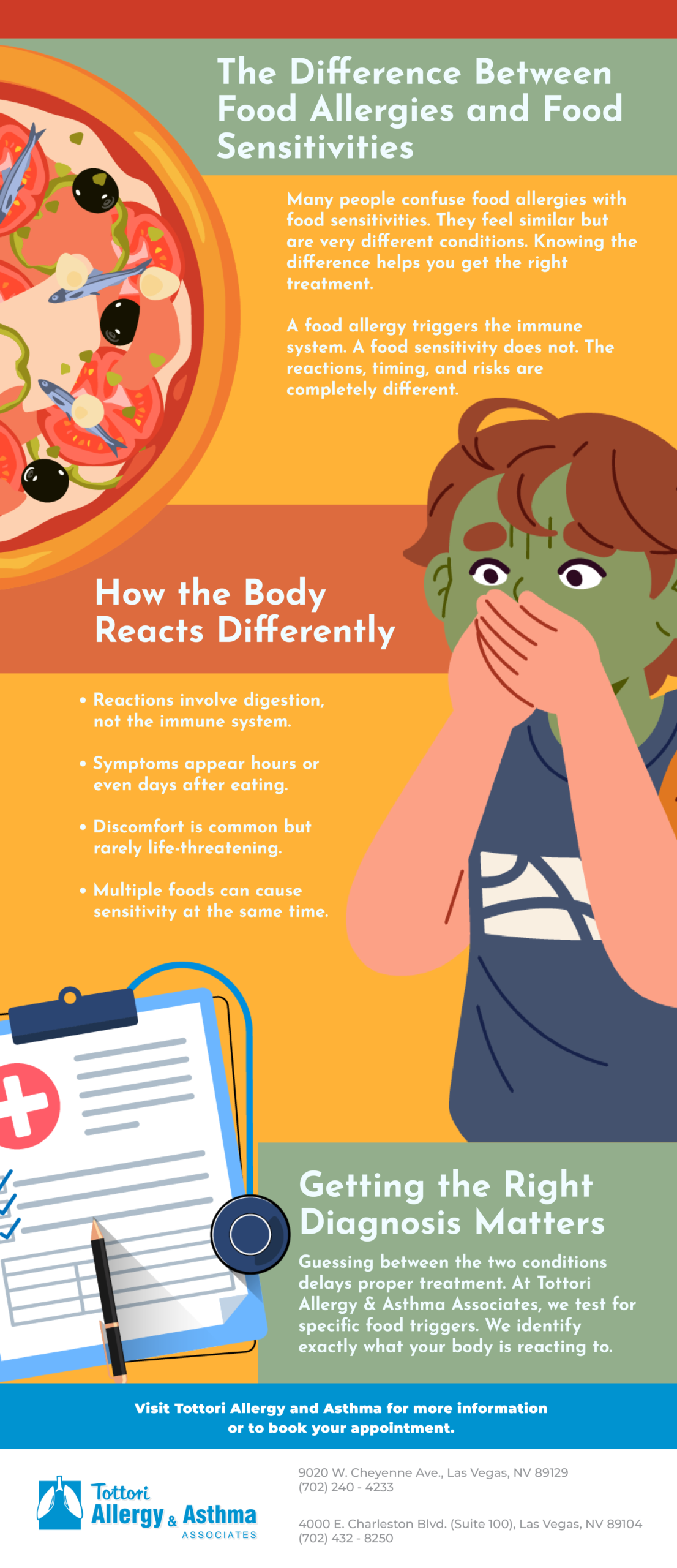
Many people confuse food allergies with food sensitivities. They feel similar but are very different conditions. Knowing the difference helps you get the right treatment.
A food allergy triggers the immune system in a specific manner. A food sensitivity does not. The reactions, timing, and risks are different.
Understanding both conditions is the first step towards a beneficial treatment plan.
How the Body Reacts Differently
Food allergies involve a specific immune system response. The body treats a harmless food as a threat. This triggers a fast and sometimes severe reaction.
Food sensitivities work differently:
- Symptoms can appear hours or even days after eating.
- Discomfort is common but rarely life-threatening.
- Multiple foods can cause sensitivity at the same time.
Food allergies generally carry more serious risks than sensitivities. Identifying which condition you have requires proper food allergy testing. Both conditions connect to a range of digestive and immune reactions.
What Sets Them Apart
Symptoms of both conditions can overlap, but there are key differences.
Speed of Reaction
Food allergies react fast. Symptoms appear within minutes of eating. Hives, swelling, and breathing trouble develop quickly.
Food sensitivities can take longer. Symptoms may not show up for several hours. This delay makes them harder to identify.
Severity of Symptoms
Allergic reactions can become life-threatening. Anaphylaxis is a medical emergency requiring immediate attention. Sensitivities cause discomfort but rarely reach dangerous levels, though in some situations can lead to severe events.
Types of Symptoms
Food allergies affect the skin, airways, and digestive system together. Sensitivities most commonly cause symptoms, such as bloating, cramping, and fatigue. Tracking symptoms after meals can help identify food allergy triggers.
Symptoms That Require More Attention
Some reactions and symptoms should be addressed by a professional.
- Throat tightening, swelling, hypotension or respiratory distress after eating.
- Hives or skin rashes appear within minutes.
- Digestive symptoms that repeat with specific foods.
- Fatigue and bloating lasting more than a day after meals.
- Reactions that worsen with every exposure.
These patterns require proper evaluation. A thorough assessment through allergy testing or a review of conditions we treat identifies exactly what is happening.
Getting the Right Diagnosis Matters
Guessing between the two conditions delays proper treatment. At Tottori Allergy & Asthma Associates, we test for specific food triggers. We identify exactly what your body is reacting to.
If certain foods are causing repeated reactions, schedule an appointment today to get answers and start a treatment plan suited to your needs.