Allergies and asthma are closely connected. Many people with allergies can develop asthma. The shift may occur gradually.
How Allergies Lead to Asthma
Untreated allergies put constant stress on the airways. Over time, this repeated irritation causes deeper inflammation. The airways become more sensitive and reactive.
This progression is more common than most people realize:
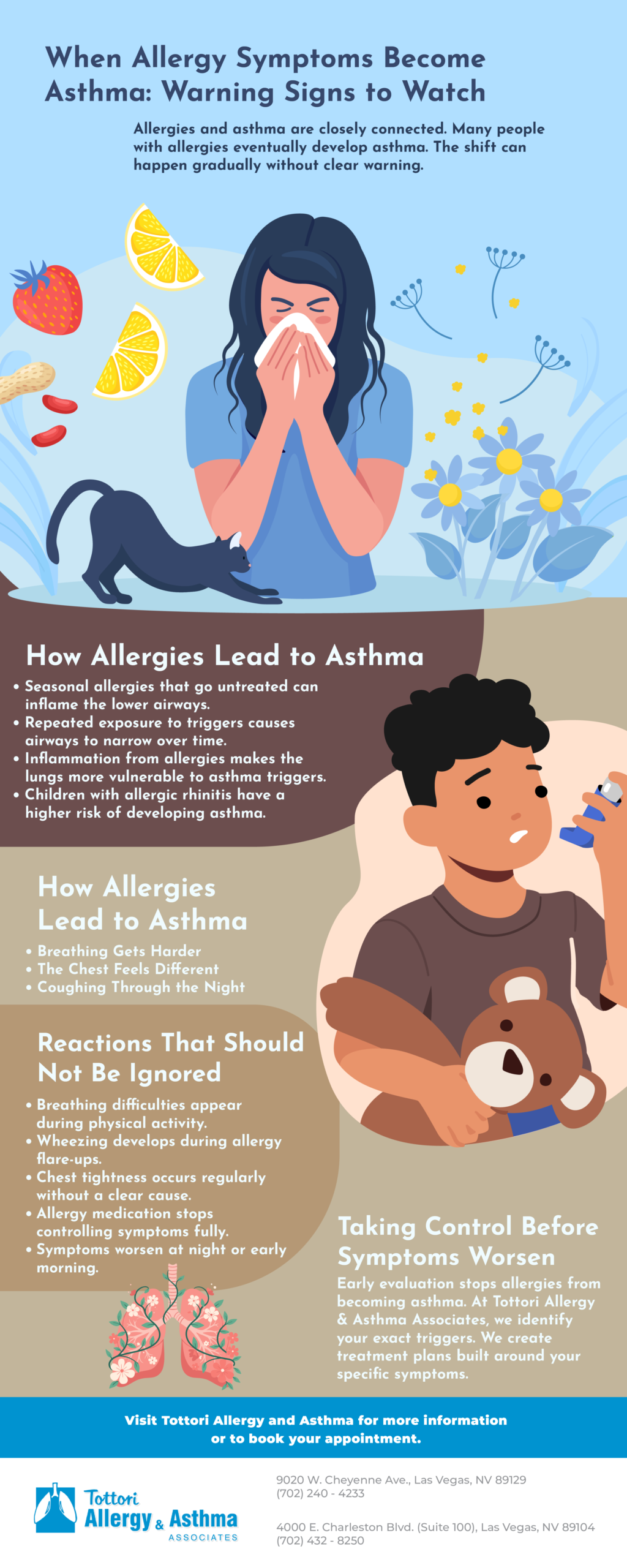
- Seasonal allergies that go untreated can inflame the lower airways.
- Repeated exposure to triggers causes the airways to narrow over time.
- Inflammation from allergies makes the lungs more vulnerable to asthma triggers.
- Children with allergic rhinitis have a higher risk of developing asthma.
- Treatment of your allergies lead to improved asthma control
This connection between allergies and asthma is well-documented. Understanding your allergy triggers early can prevent the progression to asthma symptoms.
When Allergies Start Affecting Your Lungs
Allergy symptoms follow a familiar pattern. When that pattern changes, pay attention.
Breathing Gets Harder
Allergies cause sneezing and congestion. They do not normally cause breathing trouble. Shortness of breath during daily activity is a serious sign.
The Chest Feels Different
Chest tightness is not a typical allergy symptom. It signals the airways are narrowing. This needs attention beyond standard allergy treatment.
Coughing Through the Night
Nighttime coughing is an early warning sign. It is often mistaken for post-nasal drip. Persistent cough after allergy flares needs proper lung function evaluation.
Signs That Should Not Be Ignored
Some symptoms go beyond home management.
- Breathing difficulties during physical activity.
- Wheezing that develops during allergy flare-ups.
- Chest tightness that occurs regularly without a clear cause.
- Allergy medication that stops fully controlling symptoms.
- Symptoms that worsen at night or early morning.
These patterns suggest a diagnosis of asthma. A proper assessment through allergy testing, pulmonary function testing, or a review of conditions we treat identifies the right next step.
Take Control Before Symptoms Worsen
Early evaluation can help manage symptoms. At Tottori Allergy & Asthma Associates, we can help identify your triggers and create treatment plans built around your symptoms.
If your allergies are affecting your breathing, schedule an appointment and get clear answers today.