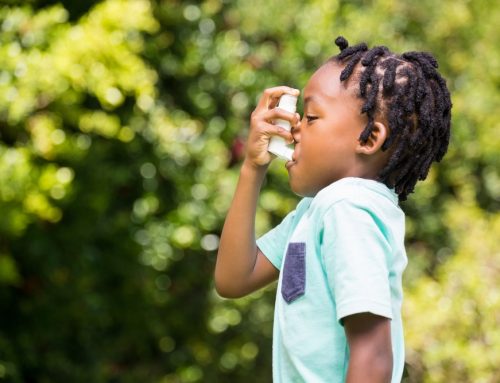
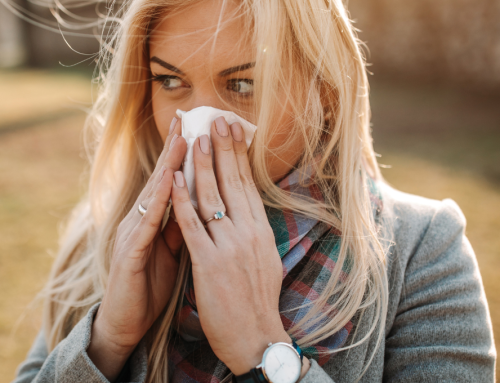
Las Vegas air quality ranks among the worst in the country. The valley traps dust, exhaust, and pollen near the ground. Breathing this air can trigger problems for allergy and asthma sufferers.
Symptoms do not always appear on obvious smog days. Air quality shifts quietly throughout the day.
Many residents blame stress or a cold. The real cause is often the air itself.
What Makes Las Vegas Air Hard to Breathe
The city sits in a bowl-shaped valley. Mountains surround it on all sides. This traps pollutants close to the ground.
Several sources push air quality down throughout the year:
- Heavy traffic releases fine particles
- Construction sites stir up silica dust and dry soil.
- Desert winds carry pollen across long distances.
- Temperature inversions trap smog during cooler months.
These particles irritate sensitive airways and worsen allergic reactions. Measuring their impact on breathing is done through pulmonary function testing.
How Poor Air Quality Triggers Symptoms
Bad air does not affect everyone the same way. People with existing allergies or asthma feel the impact faster.
Particle Pollution and the Airways
Fine particles from dust and exhaust enter the lungs easily. They irritate the airway lining and cause swelling. This leads to coughing, wheezing, and chest tightness.
Ozone and Breathing Problems
High ozone levels are common in Las Vegas summers. Ozone irritates the lungs even during light outdoor activity. Symptoms often feel worse in the afternoon when ozone peaks.
Dust and Pollen Combined
Desert dust and pollen frequently mix in the air together. This combination hits allergy sufferers harder than either trigger alone. Allergy skin testing helps identify if allergies are causing the reaction.
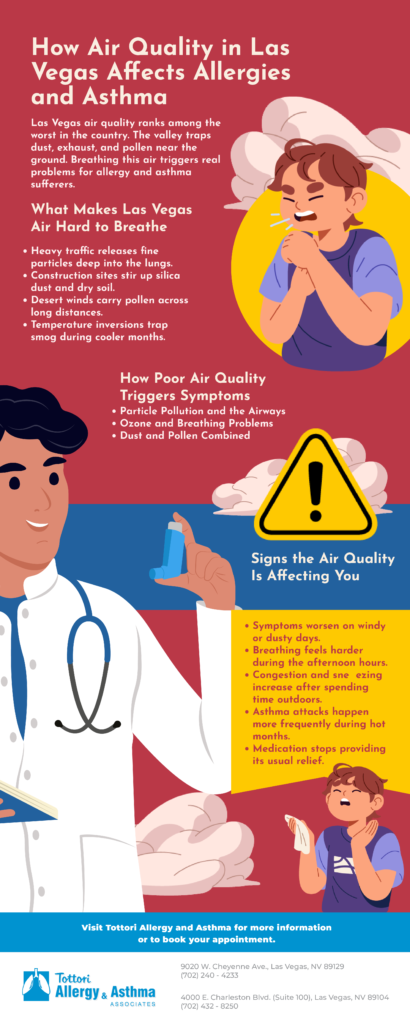
Signs the Air Quality Is Affecting You
Some days feel worse without an obvious reason. Air quality may be the cause.
Watch for these warning signs:
- Symptoms worsen on windy or dusty days.
- Breathing feels harder during the afternoon hours.
- Congestion and sneezing increase after spending time outdoors.
- Asthma attacks happen more frequently during hot months.
- Medication stops providing its usual relief.
These patterns point to air quality as a possible trigger. A proper evaluation through allergy testing or a review of conditions we treat can help identify the exact cause.
Managing Allergies and Asthma
Consistent reactions to poor air quality need proper evaluation. At Tottori Allergy & Asthma Associates, we assess desert-specific triggers.
If Las Vegas air quality is worsening your symptoms, schedule an appointment and get clear answers.
Frequently Asked Questions
1. How can I monitor air quality in Las Vegas?
You can monitor air quality in Las Vegas by checking local AQI (Air Quality Index) reports available through various websites and mobile apps. The AQI measures different pollutants, including ozone, particulate matter, and other hazardous air contaminants. It’s essential to follow daily updates, especially during the summer when ozone levels peak, to plan outdoor activities accordingly and protect your health.
2. What precautions can I take during high pollen days?
On high pollen days, it’s advisable to stay indoors, especially during early morning and late afternoon when pollen counts are highest. Keep windows and doors closed, use air purifiers, and shower after being outdoors to wash off any pollen. Wearing a mask while outside can also help reduce exposure and alleviate allergy symptoms.
3. Are there specific medications I should consider for air quality issues?
Individuals suffering from allergies or asthma should consult with their healthcare provider about appropriate medications. Antihistamines, inhalers, and nasal corticosteroids can effectively manage symptoms triggered by poor air quality. It’s crucial to have a personalized action plan in place for severe respiratory events, especially on days with high pollution levels.
4. What are some long-term effects of living in an area with poor air quality?
Long-term exposure to poor air quality can lead to chronic respiratory diseases, cardiovascular problems, and increased susceptibility to infections. Individuals with pre-existing health issues may experience exacerbated symptoms, leading to a decreased quality of life. It’s important to implement preventive measures and seek medical advice to mitigate these risks.
5. How does temperature inversion affect air quality in Las Vegas?
Temperature inversions occur when warm air traps cooler air near the ground, preventing pollutants from dispersing. In Las Vegas, this phenomenon often happens during the cooler months, leading to higher concentrations of smog and particulate matter in the air. Awareness of this phenomenon can help residents prepare for days when air quality may worsen unexpectedly.
6. Can children be particularly affected by poor air quality?
Yes, children are often more sensitive to poor air quality due to their developing lungs and higher respiratory rates. Exposure to pollutants can lead to long-term health issues such as asthma and reduced lung function. Parents should monitor air quality and limit outdoor activities for children on days with high pollution levels to protect their health.
7. What community resources are available for managing respiratory issues in Las Vegas?
In Las Vegas, various community resources are available, including local health departments, asthma education programs, and support groups. Hospitals and clinics often provide screenings, educational resources, and workshops on managing allergies and asthma. Consulting with healthcare providers can also connect patients to specialized services and therapies to improve their respiratory health.