Spring arrives, and pollen counts soar. Most people expect outdoor activities to trigger reactions. Yet stepping inside brings immediate relief for typical allergy sufferers. Some people experience the opposite pattern. Their symptoms intensify the moment they enter buildings. Congestion worsens, eyes water more, and breathing becomes harder indoors.
Allergy symptoms that are worse indoors occur because enclosed spaces concentrate allergen exposure. Ventilation systems recirculate particles continuously. Dust mites thrive in furniture and bedding. Pet dander settles on every surface without dispersing. Chemical irritants from cleaning products and building materials accumulate in sealed environments. The combination creates allergic loads far exceeding outdoor pollen exposure.
Recognizing why indoor environments trigger more severe reactions explains when this pattern needs attention.
Enclosed Spaces Concentrating Allergens
Buildings trap particles that would disperse naturally outdoors. Windows stay closed, preventing the exchange of fresh air. Heating and cooling systems push the same air through rooms repeatedly. Allergen levels build steadily throughout days and weeks.
Several mechanisms make allergy symptoms worse indoors:
- Dust mites colonize mattresses, pillows, and upholstered furniture densely.
- Pet proteins accumulate in carpets and on fabric surfaces.
- Mold grows in bathrooms, basements, and poorly ventilated areas.
- Airborne particles settle and re-enter the air with movement.
- Humidity levels create optimal conditions for allergen multiplication.
These concentrated exposures affect respiratory function measurably through pulmonary function testing when breathing difficulties develop. Indoor sensitivities connect directly to conditions we treat throughout the year.
Specific Indoor Factors Intensifying Reactions
Certain characteristics unique to indoor environments create worse symptoms than outdoor allergen exposure. Understanding these elements clarifies why some people react more severely inside buildings.
Inadequate Ventilation
Modern buildings seal tightly for energy efficiency. Fresh air enters minimally. Stale air loaded with allergens circulates endlessly through rooms. This constant re-exposure makes allergy symptoms worse indoors than brief outdoor pollen contact. Opening windows when possible reduces allergen concentration significantly.
High Allergen Density
Indoor allergen levels often exceed outdoor measurements by significant margins. Dust mite populations reach thousands per gram of dust. Pet ownership adds constant dander production. These concentrated sources create symptoms that are worse indoors than any outdoor environment naturally produces.
Chemical Compounds
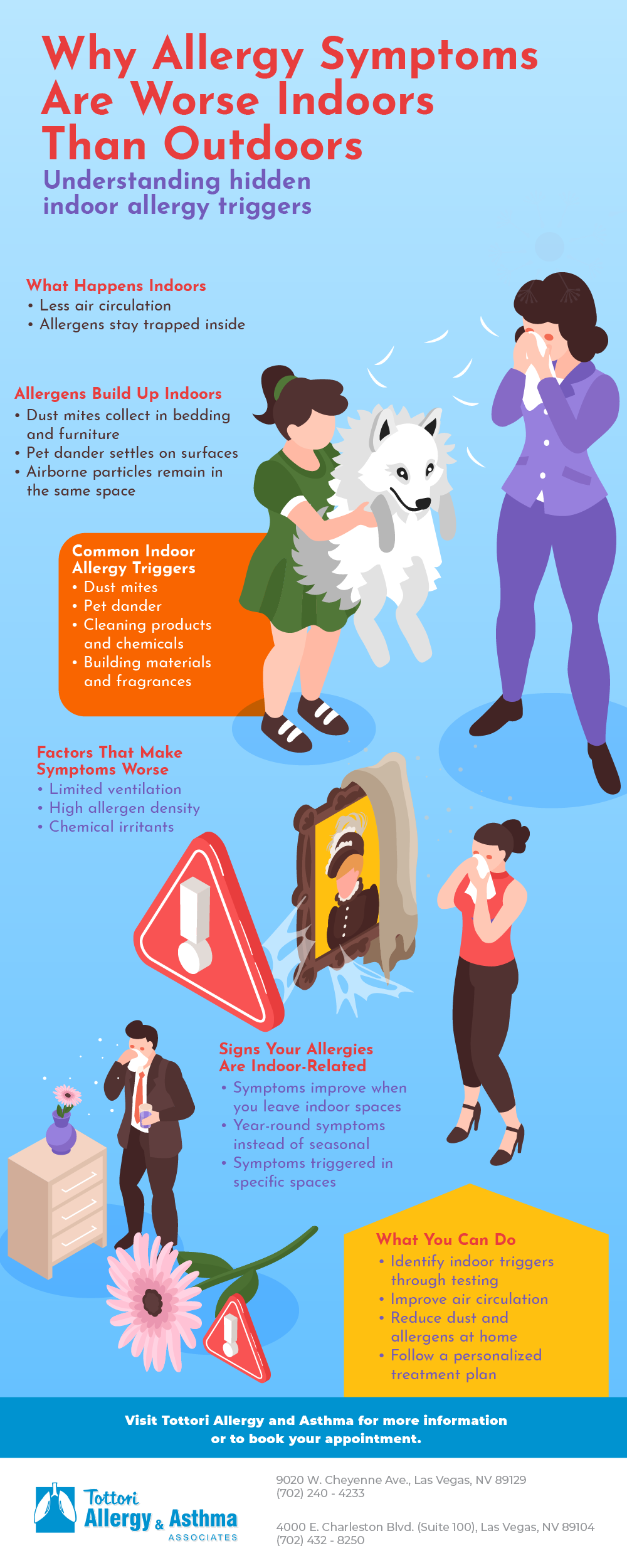
Cleaning products, air fresheners, and building materials release volatile organic compounds. These chemicals irritate already-sensitive airways. The combination of biological allergens and chemical irritants intensifies reactions beyond those caused by either trigger alone.
Recognizing Indoor Allergy Patterns
Specific symptom patterns indicate indoor allergens drive reactions. Important signs include:
- Symptoms are improving significantly when leaving buildings.
- Worse reactions at home than at work or vice versa.
- Nighttime congestion is worsening in bedrooms specifically.
- Seasonal outdoor allergies remain mild while indoor symptoms persist.
- Immediate relief was felt upon going outside.
Identifying these patterns helps determine whether immunotherapy, allergy shots, or environmental modifications provide better relief.
Indoor Allergy Solutions
When allergy symptoms worsen indoors and disrupt daily comfort, targeted interventions address specific triggers. At Tottori Allergy & Asthma Associates, assessments identify which indoor allergens create the strongest reactions.
Scheduling an appointment clarifies whether home, work, or other indoor environments drive symptoms.