Preparing for an allergy test creates uncertainty. Most people have never experienced the process before. Questions arise about pain levels, preparation requirements, and what results reveal. The unknown feels intimidating, even though testing provides valuable answers.
An allergy test happens through simple, minimally invasive procedures. Skin receives tiny allergen samples that produce visible reactions within minutes. Blood draws analyze immune responses to specific substances. The entire appointment typically completes within an hour. Results guide personalized treatment plans that address actual triggers rather than guessed sensitivities.
Understanding each step removes anxiety and helps patients prepare appropriately.
Pre-Test Preparation Requirements
Certain medications interfere with accurate results. Stopping these substances temporarily ensures testing reveals true allergic responses. Antihistamines must be avoided for three to seven days before testing. Some antidepressants also affect results and require similar breaks.
Preparation steps include:
- Discontinue allergy medications as directed by medical staff.
- Avoiding antihistamine use for the specified waiting period.
- Continue asthma medications unless specifically instructed otherwise.
- Arriving with clean skin free from lotions or creams.
- Wear comfortable clothing that allows arm and back access.
These preparations ensure an allergy test happens under optimal conditions for accurate results. Respiratory function may be assessed through pulmonary function testing during the same appointment when breathing symptoms exist.
The Testing Process
Two primary methods identify allergic sensitivities. Both provide reliable results through different mechanisms. The chosen approach depends on symptoms, medical history, and specific concerns.
Skin Prick Testing
Small allergen drops are placed on the forearm or the back skin. A tiny device pricks the surface, allowing allergen contact with immune cells. Reactions appear within fifteen to twenty minutes as raised, itchy bumps. Larger welts indicate stronger sensitivities. This quick method tests for environmental allergies, pet dander, pollen, and mold efficiently.
Blood Testing
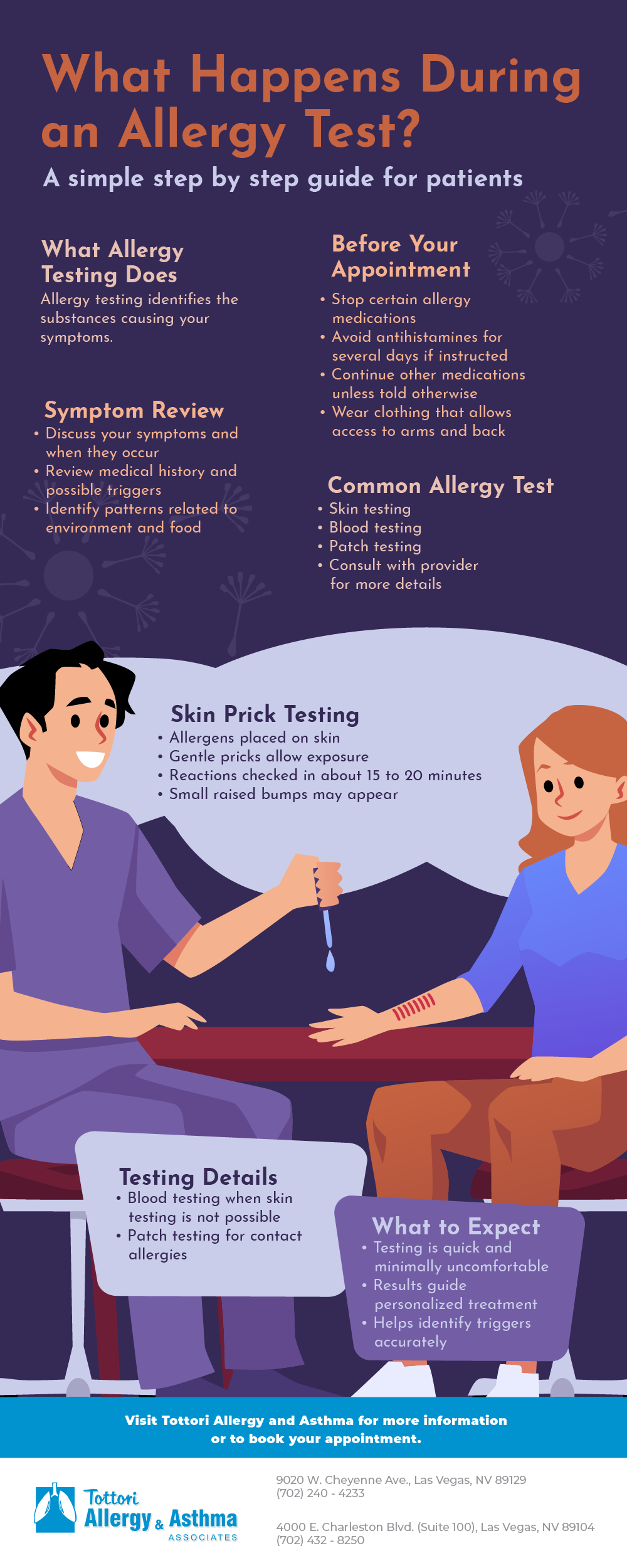
A standard blood draw measures antibody levels to specific allergens. Results take several days to process through laboratory analysis. This approach works when skin conditions prevent surface testing, or medications cannot be stopped. Food sensitivities are often confirmed through food allergy testing using blood analysis.
Patch Testing
Suspected contact allergens are applied to skin patches worn for forty-eight hours. This identifies reactions to metals, fragrances, and chemicals, causing delayed responses.
Interpreting Results
Results show which substances trigger immune responses and reaction intensity levels. Positive results confirm specific allergies requiring management. Negative results rule out suspected triggers, redirecting treatment focus.
Treatment options based on findings include:
- Avoidance strategies for identified allergens.
- Medication prescriptions targeting specific reactions.
- Immunotherapy allergy shots for long-term tolerance building.
- Environmental modifications reducing exposure levels.
- Dietary adjustments when food allergies are confirmed.
Results guide comprehensive plans addressing conditions we treat throughout the year.
Moving Forward After Testing
Test results provide clarity about what an allergy test happens to reveal regarding individual triggers. At Tottori Allergy & Asthma Associates, results translate into actionable treatment strategies.
Scheduling an appointment starts the testing process that ends uncertainty.