

Exercise-Induced Asthma in Las Vegas: What Runners, Hikers, and Athletes Should Know
Exercise-induced asthma affects Las Vegas runners and hikers. Learn how the desert triggers symptoms, how spirometry confirms it, and when to see an allergist.
Las Vegas draws serious runners and outdoor athletes for its year round sunshine, elevation training options up at Mount Charleston, and iconic trails through Red Rock Canyon, Sloan Canyon, and the Las Vegas Wash. For most people the desert climate is a training advantage. For a smaller group, exercise itself is the problem. Coughing that starts a mile into a run, tightness in the chest halfway up Turtlehead Peak, wheezing that only appears after intervals: these can all be signs of exercise-induced asthma, or EIA. The condition is treatable, but only after it is correctly identified. This guide covers how EIA works in the desert climate, how Tottori Allergy and Asthma Associates confirms the diagnosis, and when to move from “I get winded” to a scheduled appointment.
What Exercise-Induced Asthma Actually Is
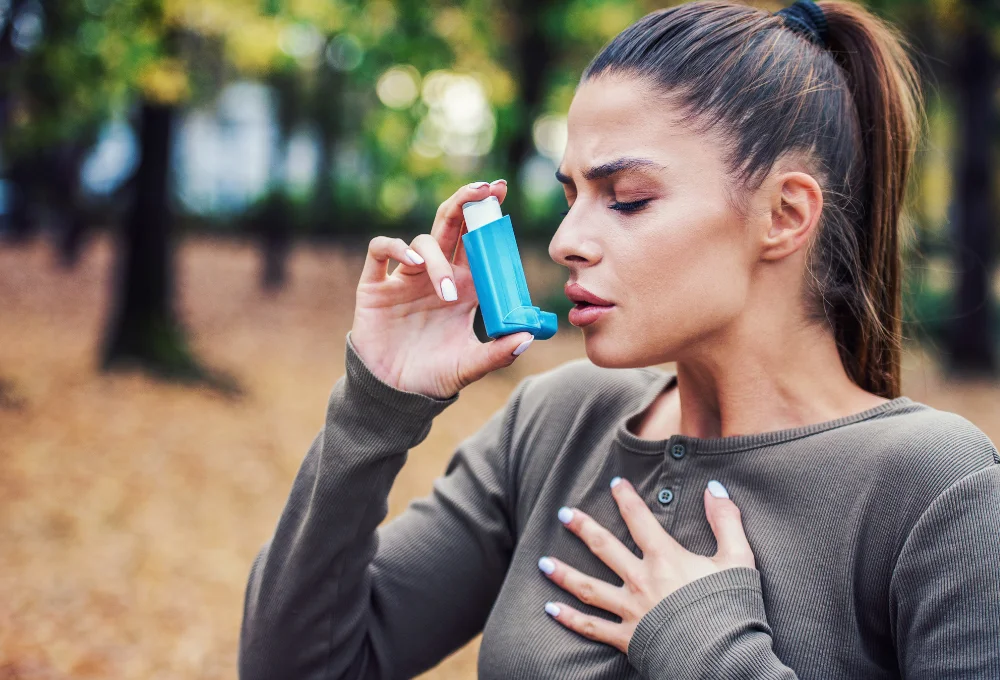
Exercise-induced asthma, also called exercise-induced bronchoconstriction, is a temporary narrowing of the airways triggered by physical exertion. During heavy breathing, cool and dry air moves through the airways faster than it can be warmed and humidified. That airway drying triggers inflammatory cells to release chemicals that cause the smooth muscle around the airways to contract. The result is coughing, wheezing, chest tightness, and shortness of breath, usually appearing 5 to 15 minutes into exercise or shortly after finishing.
EIA can exist on its own, or it can be one feature of standard asthma that only shows up during hard workouts. It is listed alongside asthma and reactive airway disease among the lung conditions we treat because the treatment options and diagnostic approach overlap.
Why the Las Vegas Desert Climate Makes EIA Worse
Every risk factor for EIA gets amplified in Southern Nevada. Low humidity dries the airways faster than in coastal climates. Cool morning air along Red Rock Loop or up the Cottonwood Valley trails creates a bigger temperature and moisture gap when inhaled during a hard climb. Dust particles from open desert soils, high pollen days from mesquite and mulberry trees, and wildfire smoke drifting in from California all add irritant load that inflames the airways before exercise even begins.
Elevation is another quiet factor. Mount Charleston tops out above 11,000 feet, and even the trailheads sit near 7,000 feet. Thinner air at altitude increases the ventilation rate you need to hold a pace, which increases airway cooling and drying. Runners and hikers who train primarily in the valley can feel notably worse when they head up.
Common Symptoms That Athletes Misread
The classic athlete assumption is that being “out of shape” explains any breathing difficulty. That is often correct, but not always. Symptoms worth investigating include:
- A dry cough that starts a few minutes into exercise and lingers afterward
- Wheezing sounds you notice most on the cool-down
- Chest tightness during interval work or at higher elevations
- Recovery breathing that takes noticeably longer than teammates or training partners
- Symptoms that get worse on high pollen or high dust days
- A rescue inhaler that seems to help even though asthma has never been diagnosed
Being Out of Shape Versus Having EIA

A fair number of athletes assume any breathing struggle simply means more training is needed. That is often correct, but a few patterns should push you toward evaluation rather than another interval session. Being out of shape produces breathlessness across most of a workout that improves as fitness improves. EIA produces reproducible symptoms that appear in the same window every time you exert, tend to worsen in dry or cold air, and often include a dry cough or wheeze that is missing when you are simply tired. If your training partners are recovering in two minutes on the same climb where you are still coughing at four, the difference is worth investigating rather than working around.
Youth athletes deserve extra attention because their EIA symptoms are often dismissed as anxiety or lack of effort by coaches. A pediatric evaluation with Dr. Tottori can clarify whether the issue is truly exercise-induced bronchoconstriction, deconditioning, or something like vocal cord dysfunction that mimics asthma but requires different treatment.


